We started with the hardest part of voice
A small team with a narrow focus: making the speech layer fast enough that latency stops being an excuse for bad voice experiences.
Why we built this
Everyone building voice agents hits the same problem around the same time: their pipeline works, their LLM responses are good, but the conversation feels slow. The pauses between caller and agent stretch long enough that users assume something is broken. They hang up.
When you profile where the latency comes from, the speech components stand out. A generic cloud STT service adds 200-400ms before your LLM even sees the transcript. A generic TTS service adds another 300-600ms before the first audio frame leaves. The LLM gets blamed for lag that isn't its lag.
We built Smallest AI to remove that excuse. Our STT and TTS components are optimized for one job: closing the gap between when a caller finishes speaking and when they hear the agent respond. We are bootstrapped, early access, and focused on a small number of teams who care about getting this right.
Small team, narrow focus
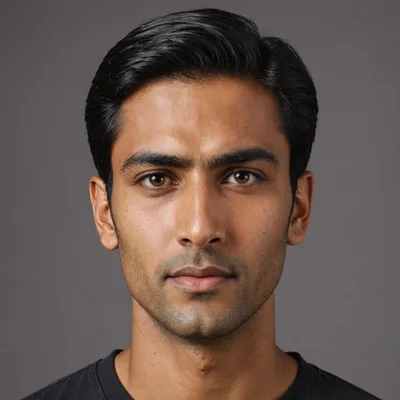
Sudarshan Kamath is CEO & Co-Founder of Smallest AI. He founded the company after observing 400ms of dead air in production voice agents. His background is in real-time audio systems engineering, with years spent building low-latency streaming infrastructure. He focuses on the timing and systems constraints behind conversational voice agents.
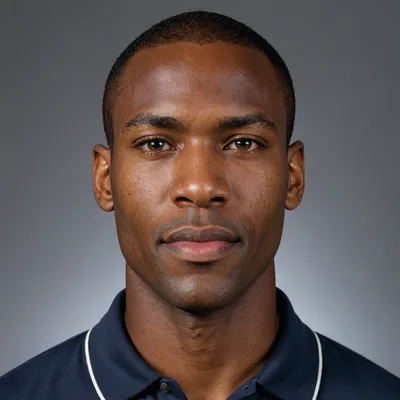
Elias Monroe is CTO at Smallest AI. His background is in distributed audio processing pipeline design. He has built real-time inference systems for high-concurrency audio workloads and focuses on speech model optimization, deployment architecture, and the operating details required to stream speech reliably in live voice agents.

Kenji Nakamura is Head of Engineering at Smallest AI. He specializes in streaming audio infrastructure, including WebSocket protocol implementation and audio codec optimization. His work also covers deployment architecture for high-concurrency voice workloads, with attention to the operational details that keep real-time speech moving through production systems.
What we believe about building this
-
Latency is the product
A voice agent that responds slowly is not a voice agent: it is a phone tree with a language model attached. Every architecture decision we make starts with the question of what it does to round-trip time.
-
Narrow is not a compromise
We do not offer speech-to-intent, diarization, translation, or voice cloning. We do STT and TTS for real-time voice agents. Narrowness is how we stay fast at one thing instead of mediocre at many.
-
Early access means early partners, not beta testers
We provision access manually because we want direct contact with the teams using us in production. Their pipeline constraints shape what we build next. We are not building a self-serve SaaS that scales by ignoring its users.
-
Claims should be measurable
Our 45ms and 38ms figures come from internal benchmark tests across 1,000+ audio samples. We describe how they are measured. We will tell you what conditions they were measured under and where you should expect them to vary.
We are in SF, let us know you are building
88 Colin P Kelly Jr Street, San Francisco, CA 94107. If you are in the area and working on voice agents, reach out. We like talking to people building with this stack.